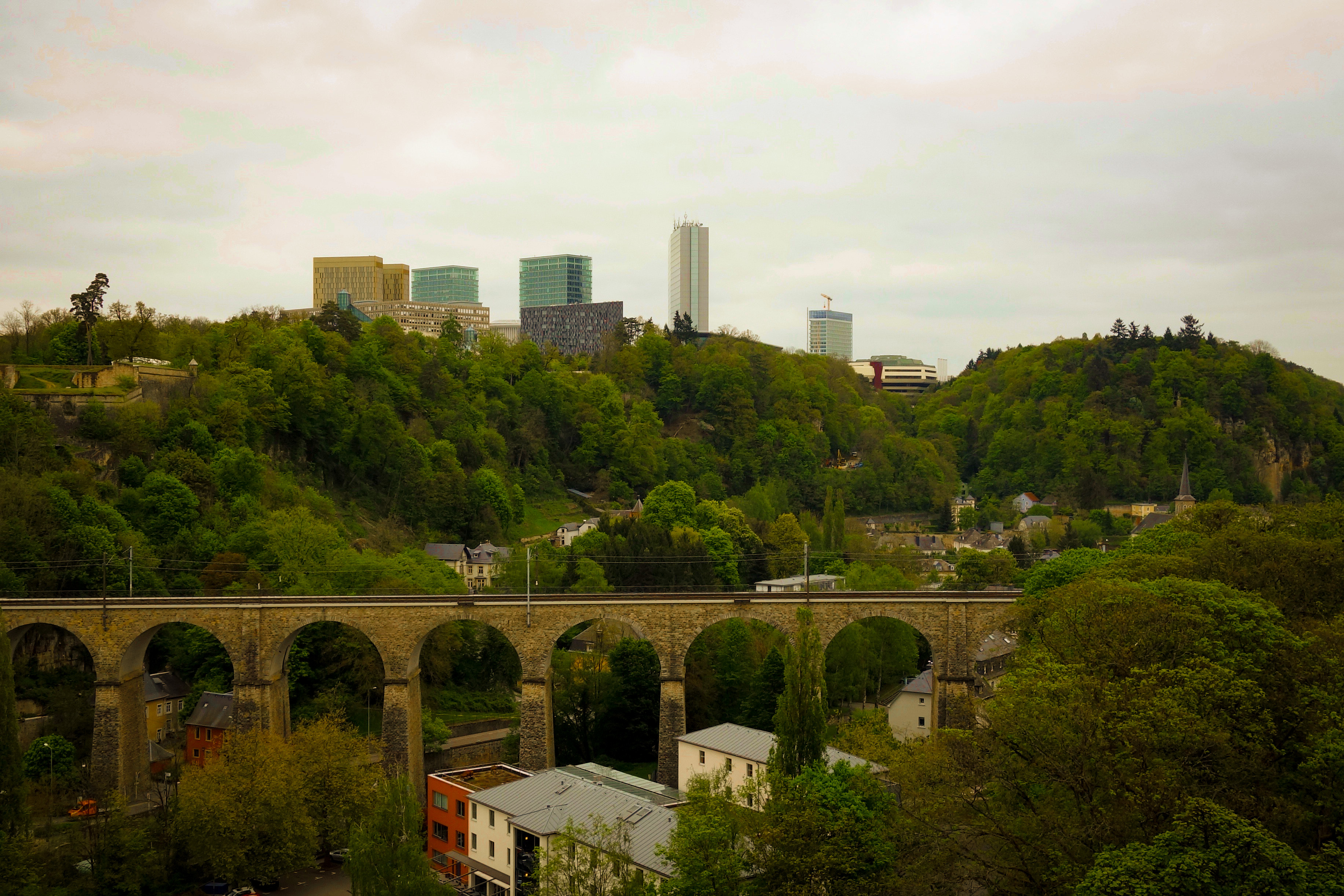
Turysta zwiedzający Luksemburg z pewnością wybierze się na Kirchberg, bo to właśnie w tej nowoczesnej dzielnicy znajduje się większość budynków instytucji europejskich. Siedzibę na Kirchbergu ma Europejski Trybunał Sprawiedliwości, sekretariat Parlamentu Europejskiego, Europejski Trybunał Obrachunkowy i Europejski Bank Inwestycyjny.
W sąsiedztwie tych instytucji znajduje się przepiękny gmach Filharmonii, zaprojektowany przez niezwykle utalentowanego francuskiego architekta – Christiana de Portzamparc, a tuż za nim MUDAM – muzeum sztuki nowoczesnej, zaprojektowane przez równie słynnego architekta – Ieoh Ming Peia, autora m.in. piramidy na dziedzińcu Luwru w Paryżu.
Za Filharmonią, obok muzeum, jest bardzo wąska uliczka prowadząca w dół. Schodząc nią dojdziemy do budynku Hémicycle, w którym odbywały się pierwsze sesje Parlamentu Europejskiego.
Przed budynkiem Hémicycle wąska uliczka łączy się z równie ciasną uliczką Julesa Wilhelma. Jeśli skręcimy w prawo, droga zaprowadzi nas do pięknie położonego małego dworku, w którym urodził się Robert Schuman – jeden z ojców założycieli Unii Europejskiej.
Przyszły polityk i dwukrotny premier Francji dorastał w Luksemburgu. Jego ojciec pochodził z Lotaryngii, należącej przed I wojną światową do Niemiec, a matka była Luksemburką z Bettembourga. Robert Schuman uczęszczał do szkoły podstawowej w swoim sąsiedztwie, gdzie nauczył się trzech języków: luksemburskiego, francuskiego i niemieckiego. Naukę kontynuował w liceum Athénée i dopiero na studia prawnicze wyjechał do Niemiec.
Dzisiaj w Wielkim Księstwie Luksemburga można znaleźć wiele ulic i placów imienia Roberta Schumana, a także liceum, którego Schuman jest patronem. Poświęcony mu pomnik znajduje się obok czerwonego mostu prowadzącego na Kirchberg – europejską dzielnicę Luksemburga. Luksemburskie biura turystyczne oferują spacer z przewodnikiem „w ślady ojca Europy”. We dworku położonym przy ulicy Julesa Wilhelma w Clausen, miejscu urodzenia Roberta Schumana, mieści się obecnie Luksemburskie Centrum Historii Współczesnej i Cyfrowej (C2DH).
Dzień Europy, nazywany również Dniem Schumana lub nieoficjalnie Dniem Unii Europejskiej, dla odróżnienia od Dnia Rady Europy świętowanego 5 maja, obchodzony jest przez kraje członkowskie Unii Europejskiej 9 maja. Dla urzędników unijnych jest to zazwyczaj dzień wolny od pracy. Święto zostało ustanowione w rocznicę przedstawienia planu utworzenia Europejskiej Wspólnoty Węgla i Stali (EWWiS), znanego jako Plan Schumana.
On the occasion of Europe Day
A tourist visiting Luxembourg will almost certainly head to the Kirchberg district, as this modern area is home to many key European institutions. Located here are the Court of Justice of the European Union, the Secretariat of the European Parliament, the European Court of Auditors, and the European Investment Bank.
Nearby, you’ll find the stunning Philharmonie building, designed by the exceptionally talented French architect Christian de Portzamparc. Just behind it stands MUDAM – the Museum of Modern Art – designed by the equally renowned architect Ieoh Ming Pei, also known for creating the glass pyramid in the courtyard of the Louvre in Paris.
Behind the Philharmonie, next to the museum, there’s a narrow street that leads downhill. Follow it, and you’ll reach the Hémicycle building, where the first sessions of the European Parliament were held.
In front of the Hémicycle, this narrow street connects with the equally tight Jules Wilhelm Street. Turning right will lead you to a beautifully located small manor house – the birthplace of Robert Schuman, one of the founding fathers of the European Union.
The future politician and two-time Prime Minister of France grew up in Luxembourg. His father was from Lorraine, which belonged to Germany before World War I, while his mother was a Luxembourger from Bettembourg. Robert Schuman attended primary school in his neighborhood, where he learned Luxembourgish, French, and German. He later studied at the Athénée high school, and then went on to pursue law studies in Germany.
Today, the Grand Duchy of Luxembourg honors his legacy with numerous streets, squares, and even a high school bearing his name. A monument dedicated to him stands next to the red bridge leading to Kirchberg – Luxembourg’s European quarter. Local tourist offices offer guided tours called “In the Footsteps of the Father of Europe.” His birthplace, located on Jules Wilhelm Street in Clausen, now houses the Luxembourg Centre for Contemporary and Digital History (C²DH).
Europe Day – also referred to as Schuman Day or unofficially as the European Union Day (to distinguish it from the Council of Europe Day celebrated on May 5th) – is observed annually by EU member states on May 9. For EU officials, it is typically a public holiday. The celebration marks the anniversary of the Schuman Declaration, which proposed the creation of the European Coal and Steel Community (ECSC), the first step towards today’s European Union.
ĆWICZENIA DO TEMATU
- Czytanie B2
- Instytucje, organy i agencje UE (Quizlet)
Ilustracje do tematu:

Dom Schumana | Schuman house


Ogród przed dworkiem | The garden in front of the manor house

Kirchberg