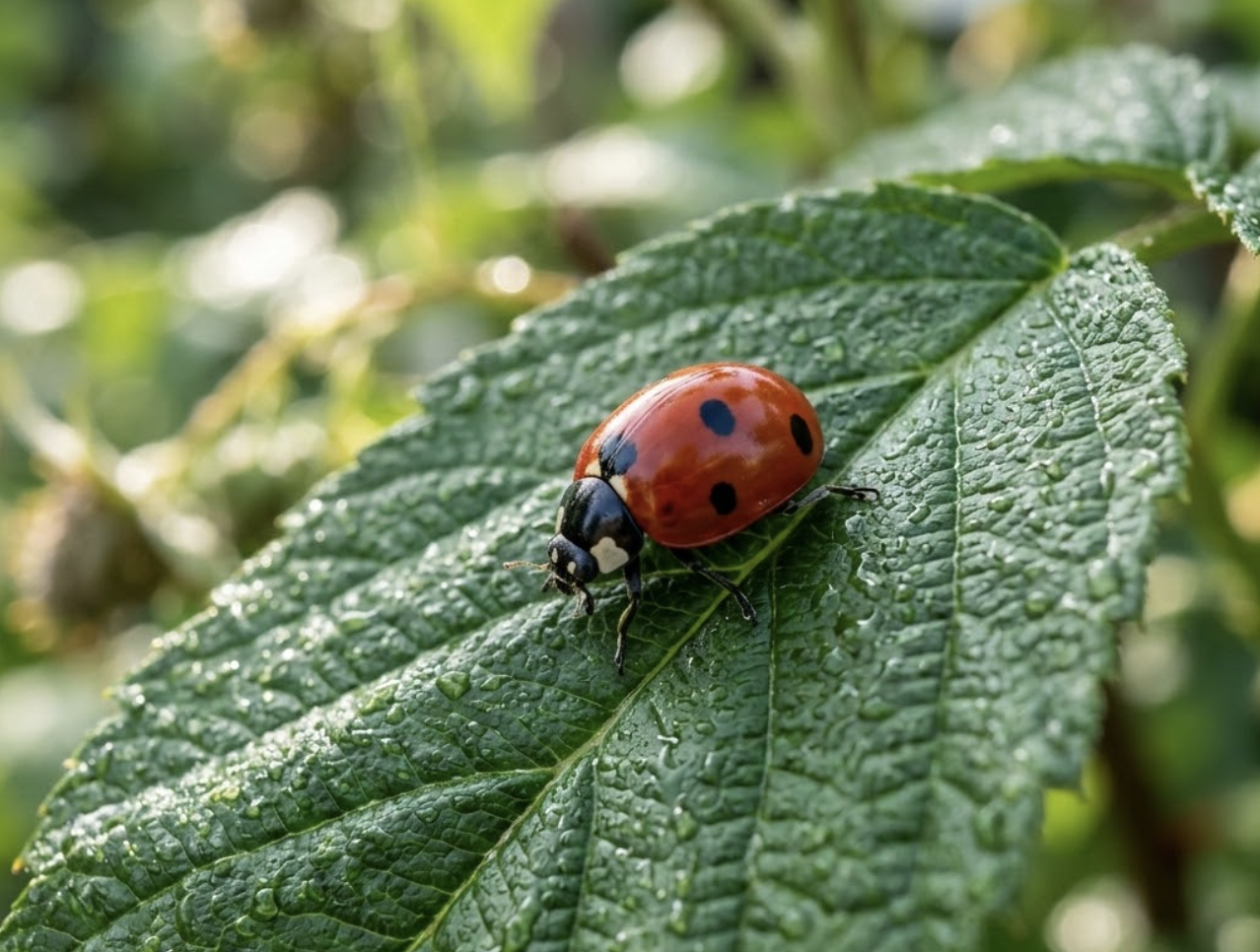
Jest piękny majowy dzień. Siedzisz na ławce w parku, a tu nagle na twoim rękawie przysiada biedronka. Spaceruje powoli po dłoni i odlatuje. Uśmiechasz się bezwiednie, ponieważ biedronki zawsze wywołują pozytywne reakcje. Czy kiedykolwiek zastanawiałeś/aś się, skąd wzięła się nazwa tego małego czerwonego chrząszcza w czarne kropki?
W języku polskim biedronka to bardzo lubiany owad. Kojarzy się ze szczęściem, latem i dzieciństwem. W wielu krajach ludzie wierzą, że biedronka przynosi szczęście (dobrą passę). Istnieje nawet znana dziecięca rymowanka:
Biedroneczko, biedroneczko, leć do nieba,
przynieś mi kawałek chleba.
Rymowanka ma wiele regionalnych wersji i odzwierciedla dawną ludową symbolikę biedronki jako zwiastuna szczęścia i pomyślności.
Pochodzenie słowa biedronka jest bardzo stare i ciekawe. Dawne formy tego słowa mogły mieć związek z wyrazem biodro. Przymiotnik *bedrъ znaczył ‘mający plamy na biodrach’. Bardzo ciekawie opisuje to Narodowe Centrum Kultury w artykule:
Dzisiaj wielu osobom słowo Biedronka kojarzy się także z popularną siecią sklepów. Ta nazwa nie jest przypadkowa. Biedronka budzi miłe skojarzenia, dlatego świetnie pasowała do marki.
A jak nazywa się biedronka w twoim języku? Zamieść swój komentarz pod postem.
Seven-spot(ted) ladybug/ladybird
It is a beautiful day in May. You are sitting on a bench in the park when suddenly a ladybird lands on your sleeve. It slowly walks across your hand and then flies away. You smile without even thinking about it, because ladybirds always seem to bring positive feelings. But have you ever wondered where the name of this small red beetle with black spots comes from?
In Polish, biedronka is a much-loved insect. It is associated with good luck, summer, and childhood. In many countries, people believe that a ladybird brings good fortune. There is even a well-known children’s rhyme:
Ladybird, ladybird, fly to the sky,
bring me a little piece of bread.
The origin of the word biedronka is very old and quite fascinating. Earlier forms of the word may have been connected with the word biodro (“hip”). The adjective bedrъ meant “having spots on the hips”. This is described particularly well by the National Centre for Culture in the following article:
Today, many people in Poland also associate the word Biedronka with the popular supermarket chain. The name was chosen deliberately, as ladybirds create warm, friendly, and familiar associations, making it a perfect fit for the brand.
And what is a ladybug/ladybird called in your language? Leave a comment below the post.
ĆWICZENIA DO TEMATU
- Infografika (owady)